How to Build a Simple Bilingual Lesson for Preschool Children
Start with a clear goal and a small topic
Before you put anything together, decide what the lesson will teach. For preschool children, keep it to one or two words per session - colours, animals, or fruit work well. If you try to teach a full sentence or a list of ten words, most young children will lose focus. Pick words that the child already knows in their first language. That way the lesson connects new sounds to familiar ideas, which makes recall easier.
The goal is not fluency. The goal is exposure and enjoyment. A child who hears the Spanish word "rojo" while looking at a red crayon, and then hears it again in a short song, is already building a neural bridge. Keep each lesson under ten minutes. Attention spans at this age are short, and a happy ending matters more than covering every item on a list.
Choose your two languages and stick to one pattern
Decide which language will be the main one and which will be the second. A common pattern is to present the word in the child's stronger language first, then repeat it in the target language. For example: "Look, a dog. Un perro." Keep the phrasing consistent. If you switch the order halfway through, the child may get confused about which word belongs to which language.
Some parents and teachers use a "language sandwich" - say the word in the first language, then in the second, then in the first again. Others prefer to introduce the second language only after the child has shown they understand the concept in the first. Both work. What matters is that you do not mix languages within the same sentence in a way that sounds unnatural. Young children pick up on patterns quickly, but they also pick up on inconsistency.
Use visuals that are clear and uncluttered
Preschool children are still learning how to process images. A picture of a single apple on a white background works better than a photo of a fruit bowl with apples, oranges and bananas. The extra objects become noise. If you are creating digital content, aim for simple cartoon-style images with bright, solid colours. Avoid detailed backgrounds or small elements that distract from the main object.
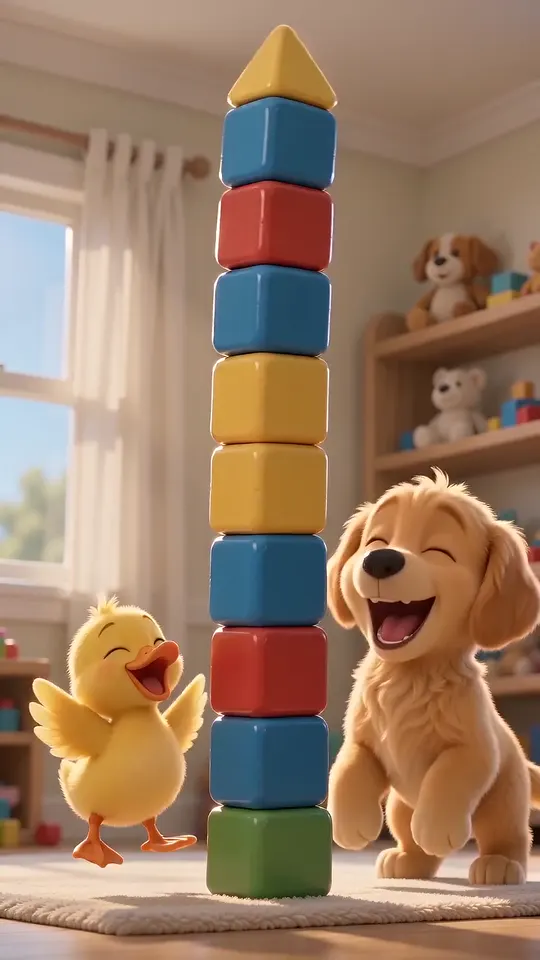
Video is especially effective because it combines sound, image and motion. A short clip that shows a cartoon cat moving across the screen while a voice says "cat - gato" holds attention better than a static flashcard. The Fluxnote kids language lesson maker is built for exactly this kind of content: it lets you generate narrated, captioned cartoon-style videos that pair an image with spoken words in both languages. The captions help older preschoolers start connecting the written word to the spoken one, even before they can read.
Add repetition through song and rhythm
Repetition is the engine of early language learning, but it has to feel natural. Nursery rhymes and simple songs do this effortlessly. A short tune that repeats the colour word three or four times, with a pause for the child to join in, is far more effective than drilling with flashcards. You do not need to be musical. Simple chants work just as well: clap a rhythm and say the word in both languages in time with the claps.
Watch for signs that the child is losing interest. If they start looking away or fidgeting, move on to a different activity even if you have not finished the song. The next session can pick up where you left off. Forcing a child to sit through a lesson they have mentally left is counterproductive. Short, happy sessions build a positive association with the target language.
Include a simple activity that uses the new words
After presenting the words and singing them, give the child a chance to use them. This does not mean asking them to speak the second language - many preschoolers are not ready for that. Instead, ask them to point, touch or pick up the object that matches the word. For example, lay out a few toy animals and say "Find the cow. Busca la vaca." If the child points to the cow, they have understood. If they do not, show them the correct animal and say the word again without correcting them.
Another low-pressure activity is sorting. Give the child a small set of objects or picture cards and ask them to group items that match the word you say. This works well with colours and shapes. The child practises listening comprehension without the stress of having to speak. Speaking will come later, often after many sessions of silent exposure.
Watch for the child's comfort level with each language
Every child processes a second language differently. Some pick up new sounds quickly and try to repeat them right away. Others stay silent for weeks, then suddenly produce a word correctly. Both are normal. The main sign to watch for is frustration. If the child seems anxious or shuts down when you switch to the second language, dial back the amount of the target language in the session. You can always increase it gradually as confidence grows.
Also watch how the child uses the two languages in play. A child who starts mixing words from both languages in their own sentences is showing that both systems are active in their mind. That is a good sign, not a problem. At this age, mixing is part of the learning process. Do not correct it. Simply model the correct form in your own speech and let the child absorb it over time.
Keep each lesson short and end on a positive note
Five to eight minutes is a good length for a single lesson. When the child is still engaged but the lesson is winding down, stop. Ending while they are still interested makes them more likely to look forward to the next session. If you push past the point of fatigue, you risk building resistance. A quick review at the very end - just one or two words - can help cement what was learned, but keep it playful. A high-five or a silly dance after the child identifies the right object works better than a formal recap.
You can build a series of lessons that reuse the same words across different contexts. The same animal words can appear in a song one day, a sorting game the next, and a short video the day after that. The repetition across formats helps the child internalise the vocabulary without getting bored. Tools that generate video content, like the Fluxnote kids language lesson maker, make this kind of multi-format repetition easy because you can create a new short video for each session without starting from scratch.

Review and adjust after every few lessons
After three or four sessions, pause and think about what worked. Did the child respond better to songs or to the sorting activity? Did they seem more engaged with animal words than with colour words? Use these observations to shape the next round of lessons. The goal is not to follow a fixed curriculum but to adapt to the child's interests and pace. A bilingual lesson that feels like play will always be more effective than one that feels like school.
Simple bilingual lessons for preschoolers do not require expensive materials or a teaching background. They need a clear plan, consistent language patterns, engaging visuals, and a willingness to follow the child's lead. With a little preparation and the right tools, you can create lessons that introduce a second language in a way that feels natural and fun.
Fluxnote on social media
 Twitter
 LinkedIn
 Facebook
 Instagram
 YouTube
 Discord